Best Pressure Washer Hoses: Materials, PSI & Buying Tips
After sending thousands of dollars down the drain with each “professional” pressure washing session, you’ve finally done it. You bought your own pressure washer. Pat yourself on the back! The hardest part was choosing the most suitable pressure washer for your needs. The second hardest part? Finding a hose that won’t betray you halfway through cleaning your driveway.
Not all men are created equal. Neither are all pressure washer hoses. Grab the wrong one, and you’re either dealing with kinks every five seconds or pressure drops that make your washer useless. Yes, Youtube is bombarded with the best hose videos; however, things aren’t that simple. The best pressure washer hose, in fact, depends on use, your machine’s PSI and other nitty-gritty details.
So what makes a pressure washer hose actually “good?” What should you look for? And more importantly, which ones will last longer than your average New Year’s resolution? Today, we’re breaking down everything you need to know about pressure washer hoses. The good, the bad, and the ones that’ll burst on you when you least expect it. Let’s dive in!
What to Look for When Buying Pressure Washer Hoses
Alright, shopping time. But hold up before you just grab the cheapest hose on the shelf. There are five key things that separate the “yeah, this’ll work” hoses from the “this thing just exploded water everywhere” disasters.
1. Pressure Capacity (PSI Rating)
This is the big one. Like, THE big one.
Your hose needs to handle more pressure than your washer puts out. According to experts, one should select pressure washer hoses with 25-30% greater outflow than the maximum output of your machine to prevent spikes of pressure and increase the life of the hose.
Got a 3000 PSI pressure washer? You should have a hose with a minimum of 3750 PSI. Running a beefier machine? Commercial hoses are 3000-8000 PSI, with certain industrial versions reaching 10,000 PSI.
2. Material
Your hose material determines everything from flexibility to whether you’ll be cleaning black streaks off your driveway after every wash session.
PVC Plastic
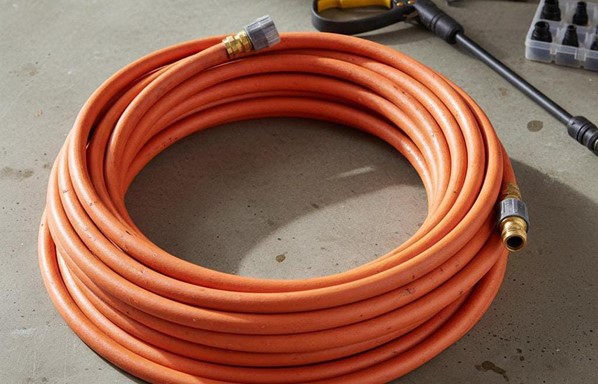
This is your budget option. PVC hoses are the most common, but they’re not very flexible. They’re stiff, they fight you, and honestly? If you get frustrated wrestling your equipment, PVC is probably why.
The upside? They are inexpensive, lighter, and suited to household use and light to medium work only. The downside? They are rigid, not able to withstand extreme temperatures, and may melt or deform when using hot water.
Rubber
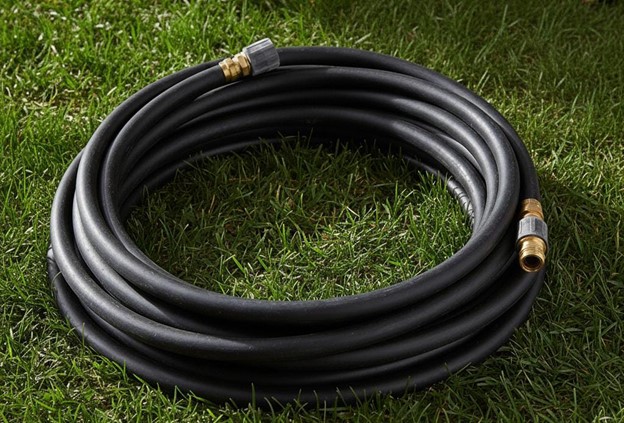
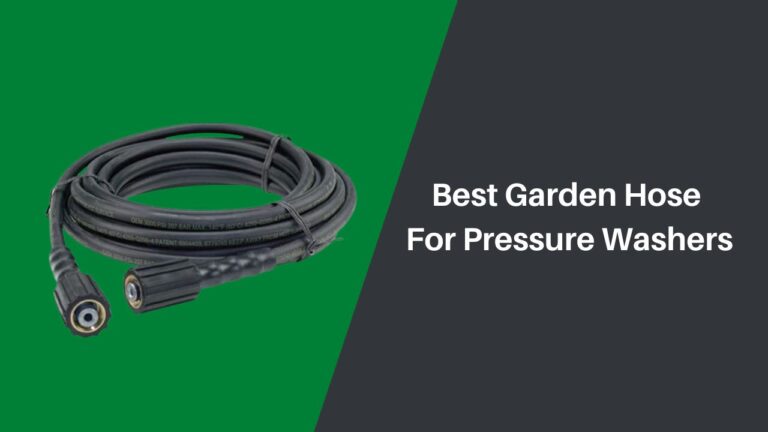
Rubber pressure washer hoses are heavier and more flexible than plastic, and they don’t kink as often. They’re durable. Abrasion-resistant. And can handle both hot and cold water like champs. Still, there’s a catch. They tend to leave black marks on surfaces as you drag them across concrete or decking.
Polyurethane
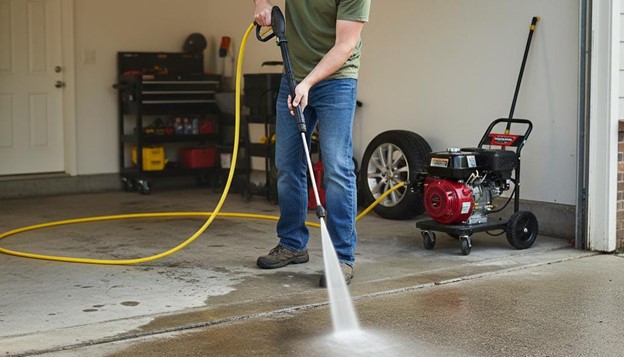
The king of pressure washer hose materials. Polyurethane hoses are both tough and flexible, often featuring steel braiding coated in bendable plastic. This is what the pros use. Why? It gives you all the flexibility of rubber without the marking problem. They resist abrasion, cuts, and chemicals and maintain flexibility even in cold temperatures.
The only real downside? Price. However, they have a much longer lifespan, and thus, you are saving in the long run. Consider it as an investment into not having to buy a hose every six months.
3. Length
Longer isn’t always better. Shocking, right?
The hose length would dictate the mobility of your washer. Cleaning your automobile in the driveway? A 25-foot hose works fine. Trying to clean a large deck/multi-story house? You might need 50, 75, or even 100 feet.
It is worth remembering that a 50-foot increment is approximately a 1-2 PSI loss in pressure. Not a huge deal for most jobs, but it adds up. Besides, longer hoses are also heavier and more prone to getting run over or damaged.
The sweet spot? Start with a 50-foot hose. Extensions or quick connects can always be added in order to gain more reach. Way easier than lugging around a 100-foot hose when you only need 30 feet.
4. Diameter
This is where things get technical, but stick with us.
Pressure washer hoses typically come in three sizes: 1/4 inch, 5/16 inch, and 3/8 inch. The diameter directly affects water flow and pressure.
1/4-inch hoses are your standard home-use hoses. They’re designed for consumer-grade electric and small gas washers with pressure ratings up to 3,200 PSI. Perfect for washing cars, cleaning decks, or general household tasks.
5/16-inch hoses are the middle child nobody talks about. Mid-sized hoses are the least common, designed for prosumer-grade washers handling 2,700 to 3,600 PSI.
3/8-inch hoses are the heavy hitters. These hoses are capable of withstanding rigorous pressure up to 10,000 PSI and permit a larger amount of water. They are heavier, bigger, and designed to be used professionally.
It is important to note that you must have a hose that is the same size as your pressure washer connections allow. Otherwise, you will be purchasing adapters, which is a pain and will increase possible leak points.
5. Connections
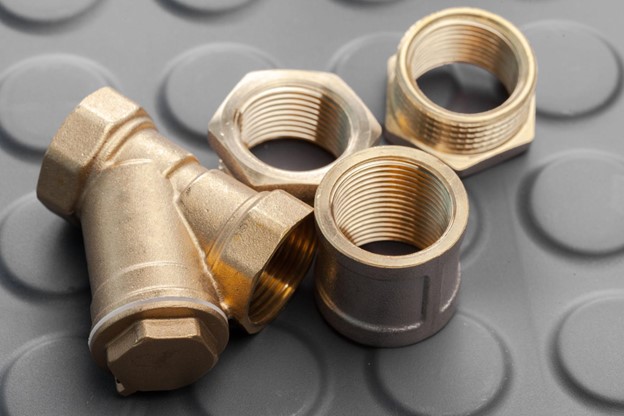
Last but definitely not least: how your hose actually connects to your pressure washer and spray gun.
Thread-On Connections (M22)
M22 fittings are the standard screw-on connections for most gas pressure washers. They work, they’re secure, but they’re slow.
Gas pressure washers use M22 fittings with a 14mm internal diameter, while many electric washers use 15mm. They look almost identical but won’t seal properly if mixed. That 1 mm difference means leaks.
Quick Connect Fittings
Game changer. Seriously. Quick-connect couplers make attaching and detaching the hose way easier and faster, taking seconds instead of 15 seconds with one hand.
The most common quick-connect size is 3/8 inch, and they’re rated to handle 5000 PSI with no problem. You can even add quick-connect adapters to existing M22 hoses for like 10 bucks. Best money you’ll spend.
Final Words
Your pressure washer is only as good as the hose attached to it. Invest in a quality pressure washer hose that matches your machine’s specs, and you’ll save yourself from headaches, injuries, and those “why did I cheap out on this?” moments.
Trust us, your driveway isn’t going anywhere, but a bad hose definitely will.