Are All Pressure Washer Hoses Universal? (Spoiler: Nope, and Here’s Why That Matters)
You’re in the middle of washing your driveway when… SNAP. Oops, what was that noise? Oh, so your pressure washer hose has decided today’s the day it retires. Great timing, right?
Before you jump on Amazon, type in “pressure washer hose,” and prepare to buy literally any hose that has decent reviews and can arrive by tomorrow. Allow us to break the news to you. NOT ALL PRESSURE WASHER HOSES ARE CREATED EQUAL. In fact, they’re about as universal as phone chargers were back in 2010. (Remember that nightmare?)
“But they’re just hoses!” you’re probably thinking. “How complicated can this possibly be?”
Oh, friend. Let us tell you about PSI ratings, coupling sizes, thread types, and the wild world of pressure washer hose compatibility. Buying the wrong hose isn’t just frustrating. It’s also a waste of money and, depending on what you pick, potentially dangerous.
Let’s dive in before you click “buy now” on something you’ll regret.
Why Pressure Washer Hoses Aren’t Universal (Even Though Everyone Wishes They Were)
You would never even attempt to install car tires designed to fit a Honda Civic into a Ford F-150, would you? The same idea is applicable here. These hoses are engineered for specific machines, specific pressures, and specific connection types.
The PSI Rating Problem
First of all, we can speak about PSI, pounds per square inch. And this is just how hard your machine can spurt. And your hose must be able to take it without, you see, blowing.
Your simple domestic pressure cleaner? Usually maxes out around 1,500-2,000 PSI. A mid-grade gas model? We’re talking 2,700-3,200 PSI. And those commercial monsters that contractors employ? They are capable of pumping 4,000-8,000 PSI or greater than that.
Pick a hose rated 25-30% above your machine’s maximum output. Why? Well, pressure spikes occur during a startup or in cases of changing nozzles or something blocking up the system. Better safe than soaked (or injured).
The Diameter Dilemma
Alright, now let’s get into hose diameters. They exist in three major sizes, and they are not interchangeable simply because they all appear as hoses.
1/4-inch hoses: The most common type. These work for consumer-grade electric and small gas pressure washers up to about 3,200 PSI. If you’re just washing your car or cleaning your patio, this is probably what you need.
5/16-inch hoses: These fit prosumer-grade gas washers handling 2,700-3,600 PSI. They exist, but they’re the least common size you’ll find.
3/8-inch hoses: The big boys. These are built for professional models and can handle up to 10,000 PSI. They’re also thicker, enabling more water volume to pass through them.
Albert Einstein said, The important thing is not to stop questioning. Sad, there was nothing he said about pressure washer hoses. If you are wondering why diameter matters, we have a simple answer:
A 3/8-inch hose can pump an approximate of 40 percent greater amount of water compared to the 1/4-inch one at the identical pressure. High flow of water leads to a fast and efficient cleaning. However, what about when you attempt to operate a small household machine with a 3/8-inch hose? It is excessive, and you have spent money on a heavier and bulkier hose, which you do not require.
The Fitting Fiasco
And now we get to the real headache: fittings. This is where the term “universal” truly becomes a joke. Connectors can be of several kinds, which are not always compatible with one another:
M22 Fittings
These are the default on many popular residential brands like Karcher, Sun Joe, and Ryobi. If you’ve got a basic home pressure washer, you’re probably dealing with M22 connections.
M22 connectors are available in two types with 14 mm and 15 mm internal diameters. They are practically the same except when you attempt to fit a 14 mm hose to a 15 mm spray wand; then there is a 1 mm gap, and it leaks. Fun times.
Quick Connect Fittings (3/8-inch)
These are heavy-duty connectors designed for high PSI systems. They let you attach and detach stuff quickly without having to screw everything together. Super convenient. They’re not commonly found on residential machines, so you might need adapters.
1/4-inch quick connects
These lightweight connectors show up on nozzles, wands, and smaller attachments. Different from the 3/8-inch version, and no, they won’t work together without an adapter.
What Happens When You Use the Wrong Hose
“Okay, but what if I just try this hose and see if it works?”
Bad idea. Really bad idea. Here’s what can happen when you mix and match incompatible components:
Leaks Everywhere
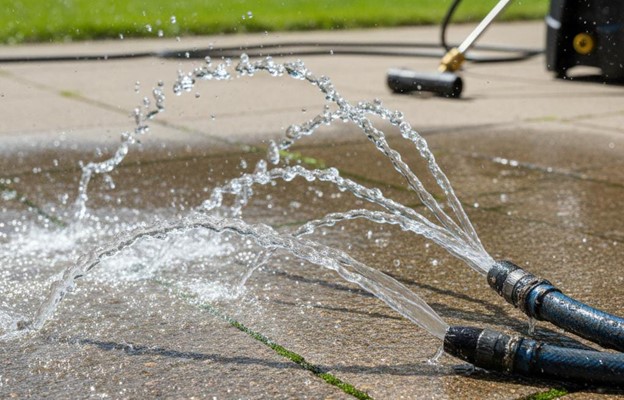
Best case scenario? The fitting does not fit well, and water sprays all over except where you want. You will lose pressure, waste water, and have to play around during your whole cleaning time with a hose that will not connect.
Hose Failure
Use a hose with too low of a PSI rating, and it can burst under pressure. That’s not just inconvenient. It’s legitimately dangerous. The wrong pressure washer hose could result in damage to your pressure washer, the object you’re cleaning, or worse, injury.
Pump Damage
Pressure washers require a specific amount of water to cool their pressure pumps. Restrict that flow, and you could burn out your pump. That’s a $200-$500 repair, by the way.
Warranty Void
Oh, and using non-compatible parts? Yeah, that will cancel your warranty even quicker than you can say, I should have read the manual. Manufacturers are relatively clear on this stuff, although no one might actually read such sections.
How to Figure Out Which Pressure Washer Hose You Really Need
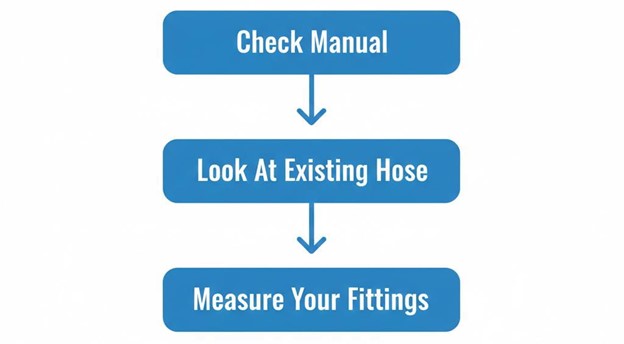
Ok, that is enough gloom and doom. Let’s find the right hose for your machine without turning it into a scientific study.
Step 1: Check Your Owner’s Manual (We Know, Boring)
Yes, we’re telling you to read the manual. We know. But seriously, it’ll tell you exactly what PSI rating, diameter, and fitting type you need. Five minutes of reading now beats three Amazon returns later.
Step 2: Look at Your Existing Hose
If your old hose is still somewhat intact, check for markings. Most hoses have the PSI rating and diameter printed right on them. Take a photo with your phone so you have it when you’re shopping.
Step 3: Measure Your Fittings
If you’re not sure what connection type you have, grab some calipers or even a ruler. Can’t measure? Take a photo of the connection from multiple angles and compare it to product photos online. Or, you know, bring the spray gun to the hardware store and test-fit hoses there.
Final Words
Once you understand the three key factors: PSI rating, diameter, and fitting type. It is not that difficult to find the right pressure washer hose. Simply compare your machine to those specs, and you are good to go.
And look, we get it. You simply want to wash your driveway and not to be a pressure cleaner guru. Yet five minutes of homework now saves you from holding three incompatible hoses, wondering why none of them fit.
Trust us on this one. Your future self will thank you!
All good on the pressure washer hoses? Good. What’s the soap you gonna run through it? Dawn Dish soap? It’s cheap and readily available. Is it safe, though? Find out here.