Address
304 North Cardinal St.
Dorchester Center, MA 02124
Work Hours
Monday to Friday: 7AM - 7PM
Weekend: 10AM - 5PM
Address
304 North Cardinal St.
Dorchester Center, MA 02124
Work Hours
Monday to Friday: 7AM - 7PM
Weekend: 10AM - 5PM

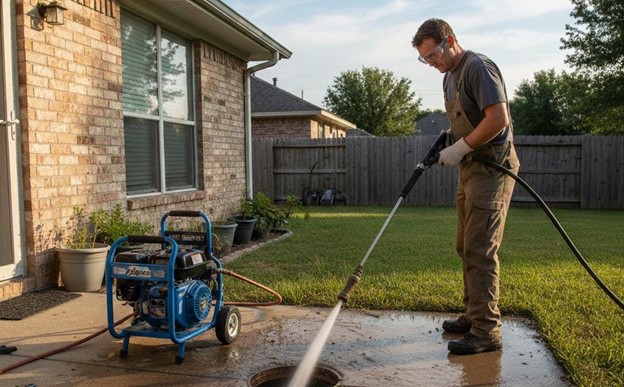
Pressure washers clear drains… sometimes. Pipe damage, injuries, and stuck hoses are the trade-off.
You’re staring at your clogged drain. Then you’re staring at your pressure washer sitting in the garage. And suddenly, a lightbulb goes off in your head: “Wait… can I just blast this clog out with my pressure washer?”
Short answer? Yeah, you can turn your pressure washer into a makeshift drain jetter. People do it all the time. Slightly longer answer? You absolutely can, but whether you should depends on your machine, your plumbing knowledge, and, honestly, your tolerance for potential disaster.
Let’s break down what you’re really getting into here before you shove a hose down your kitchen sink and hope for the best.
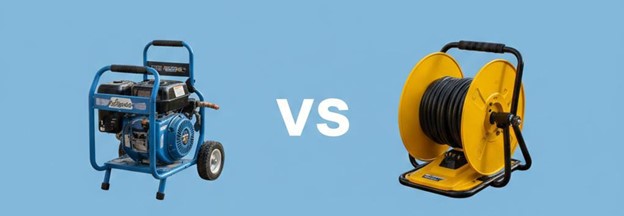
Drain jetters and pressure washers are not twins; they are cousins. They are designed on the same principles, only to be used in entirely different jobs.
It is all about your pressure washer and PSI (pounds per square inch). That is what is used to blast dirt off the driveway. Concentrated high-pressure spray: in and out.
A drain jetter? It is more of GPM (gallons per minute). Surely it requires pushing, but water quantity pushing debris along with the jetting action, tearing it into bits, is what clears up a drain. It has little to do with brute strength and is more of a continual movement.
Consider it in the following manner: a pressure washer is a sledgehammer. A drain jetter resembles a firehose, having an extremely intelligent nozzle design.
Not all pressure washers are created equal when it comes to jetting drains. Here’s what you need at minimum:
At least 2,000 PSI. Anything less and you’re basically just running water through your pipes. Might as well use a garden hose and save yourself the trouble.
At least 2 GPM flow rate. This is the part people forget about. You need enough water volume to push the debris through the pipe. A 1.2 GPM electric pressure washer might have decent PSI, but it won’t move enough water to effectively clear a clog.
A gas-powered unit is ideal. The vast majority of electric pressure washers simply do not have the capability to do serious drain work. They’ll deal with the small clogs found in small pipes; however, anything large? You’re gonna be disappointed.
Have a 3,000+ PSI gas pressure washer with 2.5+ GPM? Okay, now we’re talking. You have the horsepower to get this off.
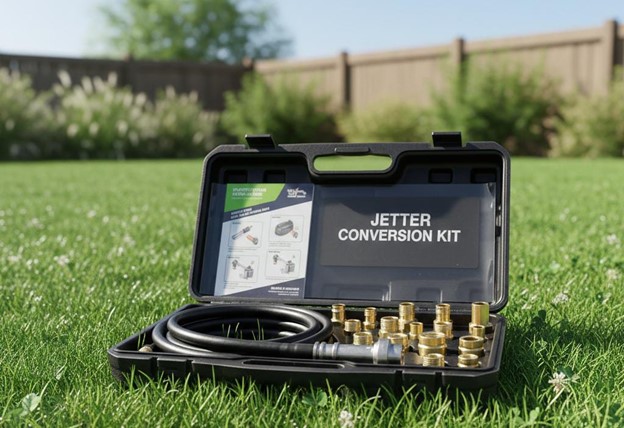
You cannot simply pop your common pressure washer nozzle down a drain and say goodbye. That is a formula for a flooded bathroom and a very costly visit by a plumber.
You will be required to have a jetter kit consisting of:
This is NOT your regular pressure washer hose. The jetter hoses are smaller and more flexible and are made to wind through pipes. They are typically 1/8 inch in diameter, and they exist in different lengths (50, 100, or 150 feet). The larger the hose, the further you can go down your plumbing.
This is where the magic happens. These nozzles shoot water backwards and at angles, creating thrust that pulls the hose through the pipe while breaking up clogs. The most common is a 1/8-inch rotating nozzle, but there are different sizes for different pipe diameters.
Depending on your pressure washer’s connections, you might need adapters to hook up the jetter hose. Not all setups are plug-and-play.
Expect to spend anywhere from $50 to $200+ on a decent jetter kit. The cheap ones on Amazon? They’ll work for occasional use on simple clogs. However, if you’re serious about this, invest in quality equipment.
Alright, let’s get real for a minute. Using a pressure washer as a jetter isn’t just about whether it works. It’s about whether you can do it without hurting yourself or destroying your plumbing.
You might find yourself in the emergency room in the event that the jetter hose kicks back or you point it at yourself. We are discussing the fact of water being blasted under your skin at thousands of PSI. Not fun. Therefore, be in the habit of using safety glasses and gloves.
Older pipes, PVC, or anything already weakened? Too much pressure can crack them or blow out joints. Then you’ve got a way bigger problem than a clog. Know your plumbing before you go full throttle.
If you push too hard or hit a sharp turn wrong, that jetter hose can get lodged in your pipes. Now you’ve got a clogged drain AND a stuck hose. Good luck explaining that one to a plumber.
Look, we get it. You’ve got a clog, you’ve got a pressure washer, and you’re not about to spend $200 calling a plumber for something you might be able to fix yourself. Fair enough.
Here’s how to do it without wrecking everything:
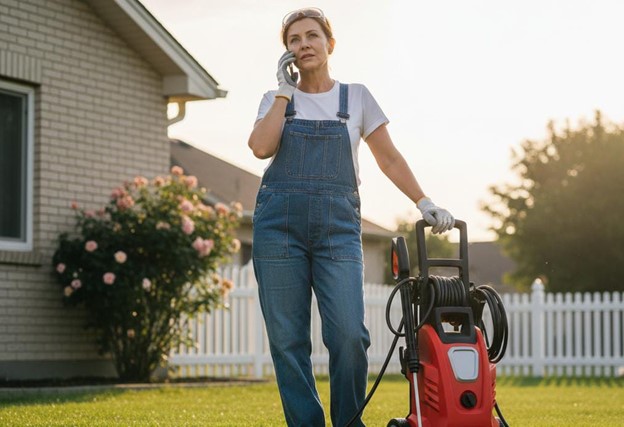
Here’s when DIY jetting crosses the line into “just pay someone who knows what they’re doing”:
Plumbers have cameras, specialized equipment, and insurance for when things go sideways. Sometimes the $150-$300 service call is cheaper than the damage you could cause trying to DIY it.
Can you turn your pressure washer into a drain jetter? Absolutely. With the right machine (2,000+ PSI, 2+ GPM), a proper jetter kit, and some common sense, you can clear a lot of common drain clogs yourself.
Should you do it for every clog? Probably not. Simple clogs in accessible drains? Go for it. Anything involving your main sewer line, tree roots, or plumbing you’re not familiar with? Call a pro.
Your pressure washer is a versatile tool. Just make sure you’re using it smart, not just using it because you can. Now go forth and unclog responsibly. Your drains (and your wallet) will thank you.